General Chair
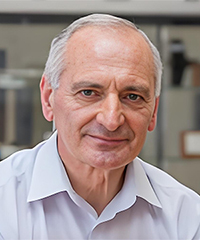
Mário F. S. Ferreira
Professor, Aveiro University, Portugal.
Research field: Modelling and characterization of multi-section semiconductor lasers for coherent systems; Quantum well lasers; Optical fibre amplifiers and lasers, Optical sensors; Soliton propagation; Polarization and nonlinear effects in optical fibres.
Mário F. S. Ferreira is a Professor at the Physics Department of Aveiro University, Portugal. Between 1990 and 1991 he was at the University of Essex, UK, performing experimental work on external cavity semiconductor lasers and nonlinear optical fiber amplifiers. He has been the leader of the Optics and Optoelectronics Group of the I3N – Institute of Nanostructures, Nanomodelling and Nanofabrication. He has written about 400 scientific journal and conference publications, and several books. He was the Guest Editor of four Special Issues of "Fiber and Integrated Optics" (Taylor & Francis): "Fiber Optics in Portugal" (2005), "Nonlinear Fiber Optics" (2015), "Optical Fiber Sources and Amplifiers" (2020) and "Quantum Communications" (2020), a joint Special Issue of "Optics Express" and "Applied Optics" (OSA) on "Optical Sensors and Sensing 2019", one Special Issue of the "Journal of Nonlinear Mathematical Physics" (Springer) on "Complex Ginzburg-Landau Equation", and two Special Issues of "Fibers" (MDPI) on "Optical Fiber Communications" and "Specialty Optical Fibers – Material, Fabrication and Applications" (2022), and and two Special Issues of "Fibers" (MDPI) on "Optical Fiber Communications" (2020) and "Characterization and Applications of Specialty Optical Fibers" (2025). He is a Fellow and a Travelling Lecturer of both OPTICA (Optical Society of America) and SPIE - The International Society for Optics and Photonics, and a Member of IEEE. He served in various committees of OSA/OPTICA and of SPIE, as well as in the organizing and scientific committees of various international conferences. Actually, he serves also as an Associate Editor or as an Advisor Board Member of several international journals in the area of optics and photonics.
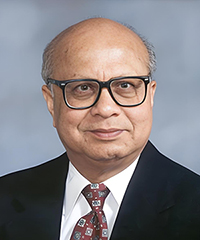
Bimal Kumar Bose
Professor, University of Tennessee, Knoxville, USA.
Research field: Power electronics; Power converter topologies; Control techniques; Renewable energy systems; Motor drives.
The term "father of power electronics" is often attributed to Emeritus Professor Bimal Bose. He is widely regarded as one of the founding figures and pioneers in the field of power electronics Bose's extensive research and contributions have significantly advanced the understanding and application of power electronics technology. Bose held the Condra Chair of Excellence (Endowed Chair Professor) in Power Electronics at UT since 1987, where he was responsible for teaching and the research program in power electronics and motor drives. Concurrently, he was the Distinguished Scientist (1989-2000) and the Chief Scientist (1987-1989) of EPRI-Power Electronics Applications Center, Knoxville, TN. Prior to this, he was a Research Engineer in the General Electric Corporate Research and Development (now GE Global Research Center), Schenectady, NY, for 11 years (1976-1987), an Associate Professor of Electrical Engineering, Rensselaer Polytechnic Institute, Troy, NY for five years (1971-1976), and a faculty member at Bengal Engineering and Science University (BESU)(formerly Bengal Engineering College), India for 11 years (1960-1971). He served as a visiting professor in Federal University of Mato Grosso Sul (1989), Brazil; Aalborg University (1997), Denmark; Padova University (2003), Italy; Sevilla University (2008), Spain; and European PhD School (2010), Italy. He has been power electronics consultant in a large number of industries. Dr. Bose has authored and co-authored more than 250 papers and holds 21 U.S. patents. Bose has served the Member of the IEEE Medal in Power Engineering Committee, Chairman of the IEEE Industrial Electronics Society (IES) Power Electronics Council, Associate Editor of the IEEE Transactions on Industrial Electronics, IEEE IECON Power Electronics Chairman, Chairman of the IEEE Industry Applications Society (IAS) Industrial Power Converter Committee, IAS Member of the Neural Network Council, Vice-Chair of the IEEE Medals Council, Vice-Chair of the IAS Distinguished Lecture Program, Member of IEEE-USA Energy Policy Committee, Member of the IEEE Fellow Committee, Member of IEEE Lamme Medal Committee, Member of the Editorial Board of the Proceedings of the IEEE, and Member of IEEE Spectrum Advisory Board. He was the Guest Editor of the Proceedings of the IEEE (Special Issue of Power Electronics and Motion Control, August 1994), and Special Section Editor of IEEE Transactions of Industrial Electronics (Neural Network Applications in Power Electronics and Motor Drives, February 2006).
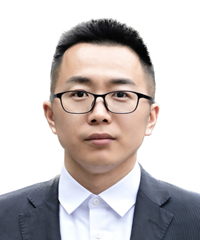
Shunli Wang
Professor, IET Fellow, IEEE Member, Inner Mongolia University of Technology, China.
Research field: Modeling and state estimation for energy storage systems; New energy measurement and control; Optimization strategy; Energy management; Battery system modelling.
Wang Shunli, professor, doctoral supervisor, vice president of the Smart Energy Storage Research Institute, academic dean of the School of Electric Power of Inner Mongolia University of Technology, academician of the Russian Academy of Natural Sciences, IET Fellow, IEEE Member, academic leader of the China Electrical Safety and Quality Testing Center, one of the first academic and technical leaders of China Science and Technology City, and one of the top 2% scientists in the world. He mainly focuses on the major strategic needs of the new energy and energy storage system industry, relying on the Academician Expert Workstation of Large-Scale Energy Storage Technology, the Engineering Research Center of the Ministry of Education for Large-Scale Energy Storage Technology, and the Smart Energy Storage Research Institute to focus on the research of green and low-carbon energy storage for smart grids. Professor Wang has published 258 SCI core library retrieval articles, 173 articles in JCR Q1 and TOP journals, 34 highly cited/hot articles, 52 authorized invention patents/standards/software copyrights, 7 books published in internationally renowned publishers such as Elsevier and IET, and won 7 awards at the provincial and ministerial levels, including 2 international gold awards. He has served as the chairman of international conferences 27 times, 4 editors of international journals, and won 13 scientific and technological awards such as the Gold Award at the 48th Geneva Invention Exhibition. He is also a member of the New Energy and Energy Storage System Control Committee of the Chinese Automation Society, a member of the System Simulation Professional Committee of the Chinese Automation Society, a member of the System Simulation Professional Committee of the Chinese Automation Society, a senior member of the Chinese Automation Society, and a member of the China Power Supply Society.
Co-Chair
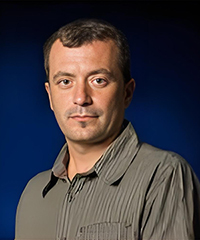
Carlos M. Travieso-Gonzalez
Professor, University of Las Palmas de Gran Canaria, Spain.
Research field: Data mining; Classification systems; Signal and image processing; Machine learning; Environmental intelligence.
Carlos M. Travieso-González is a Full Professor of Signal Processing and Pattern Recognition and Head of Signals and Communications Department at ULPGC. He is co-author of 4 books, co-editor of 25 Proceedings Books, and Guest Editor for 8 JCR-ISI international journals and up to 24 book chapters. He has over 500 papers published in international journals and conferences (100 indexed on JCR – ISI - Web of Science). He is the founder of The IEEE IWOBI conference series and President of its Steering Committee, The InnoEducaTIC conference series; and The APPIS conference series. He is an evaluator of project proposals for the European Union (Horizon Europe and H2020 - EU), Medical Research Council (MRC – UK), Spanish Government (ANECA - Spain), Spanish Research Agency (AEI – Spain), Croatian Science Foundation (HRZZ – Croatia), Research National Agency (ANR - France), DAAD in Spain (Germany), Argentinian Government and Colombian Institutions. He has been reviewer in different indexed international journals (<75) and conferences (<250) since 2001. He has been member of IASTED Technical Committee on Image Processing since 2007 and member of IASTED Technical Committee on Artificial Intelligence and Expert Systems since 2011. He will be APPIS 2024 General Chair, , and was APPIS 2024, General Chair APPIS 2023 General Chair, APPIS 2022 General Chair, IEEE-IWOBI 2022, ACM-APPIS 2020 General Chair, IEEE-IWOBI 2019 General Chair, APPIS 2019 General Chair, IEEE-IWOBI 2018 General Chair, APPIS 2018 General Chair, InnoEducaTIC 2017 General Chair, IEEE-IWOBI 2017 General Chair, IEEE-IWOBI 2015 General Chair, InnoEducaTIC 2014 General Chair, IEEE-IWOBI 2014 General Chair, IEEE-INES 2013 General Chair, NoLISP 2011 General Chair, JRBP 2012 General Chair and IEEE-ICCST 2005 Co-Chair. He is Associate Editor on Computational Intelligence and Neuroscience journal, in Entropy and Sensors. In 2022, he was one of the researchers included as a member of the two percent most influential group in the world, according to the Stanford ranking in the 2022 edition.
Organizing Committee Chair
Ronghua Li, Dean of the School of Electrical Engineering, Dalian Jiaotong University, China
Qingsheng Feng, Vice Dean of the School of Electrical Engineering, Dalian Jiaotong University, China
International Scientific Committee Chair
Manuel F. M. Costa, University of Minho, Portugal
Yufei Ma, Harbin Institute of Technology, China
Chun-Yi Su, Concordia University, Canada
Dragan Peraković, University of Zagreb, Croatia
Francesco Zirilli, Sapienza Universita Roma, Italy
Joel J. P. C. Rodrigues, Federal University of Piauí, Brazil
Marcin Paprzycki, Polish Academy of Sciences, Poland
Pascal Lorenz, University of Haute Alsace, France
Sos Agaian, City University of New York, USA
Xiaodong Liu, Edinburgh Napier University, UK
Yang Yue, Xi'an Jiaotong University, China
International Scientific Committee Member
Aarti Amod Agarkar, Vishwakarma Institute of Technology, India
A.B Feroz khan, Syed Hameedha Arts and Science College, India
Adrian David Cheok, Nanjing University of Information Science and Technology, China
Ahmed Mateen Buttar, University of Agriculture Faisalabad, Pakistan
Ajay B. Gadicha, P. R. Pote Patil College of Engineering and Management, India
Alessio Faccia, University of Birmingham - Dubai Campus, UAE
Alex Mathews, Bethany College, USA
Aizaz Chaudhry, Carleton University, Canada
Azlan Mohd Zain, Universiti Teknologi Malaysia, Malaysia
Bin Liu, Northeast Petroleum University, China
Bingcai Chen, Dalian University of Technology, China
Boddu Raja Sarath Kumar, Raja Sarath Kumar Boddu, Raghu Engineering College, India
Boris Andrievsky, Baltic State Technical University, Russia
Daehee Seo, Sangmyung University, South Korea
Danilo Avola, Sapienza University of Rome, Italy
Debashis De, Maulana Abul Kalam Azad University of Technology, India
Deepak Kumar Panda, Amrita Vishwa Vidyapeetham University, India
Dimitrios A. Karras, National and Kapodistrian University of Athens (NKUA), Greece
Enaul Haq Shaik, Enaul Haq Shaik, Vasireddy Venkatadri International Technological University, India
Fanyi Meng, Tianjin University, China
Gajendra Sharma, Kathmandu University, Nepal
Galina Ilieva, Paisii Hilendarski University of Plovdiv, Bulgaria
George K. Adam, University of Thessaly, Greec
Gerald Penn, University of Toronto, Canada
Gheorghe Grigoras, Technical University of Iasi, Romania
Ghezlane Halhoul Merabet, Smart Systems Laboratory, ENSIAS, Morocco
Haibin Zhu, Nipissing University, Canada
Hamed Taherdoost, University Canada West, Canada
Hao Ying, Wayne State University, USA
Hasmat Malik, Universiti Teknologi Malaysia, Malaysia
Heidari Arash, University of Trento, Italy
Honglei Wei, Dalian Polytechnic University, China
Hugo Morais, Universidade de Lisboa, Portugal
Jacek M. Zurada, University of Louisville, USA
Jamshed Iqbal, University of Hull, UK
Janusz Kacprzyk, Polish Academy of Sciences, Poland
Jawwad Nasar Chattha, University of Management and Technology, Pakistan
Jay Kumar Pandey, Shri Ramswaroop Memorial University, India
Jehad M. Hamamreh, Antalya Bilim University, Turkey
Jianjun Xu, Northeast Petroleum University, China
Jiliang Zhang, Northeastern University, China
Jingfang Wang, Harbin Engineering University, China
Jingmin Li, Dalian University of Technology, China
Jing Zhang, Emory University, USA
Jixin Ma, University of Greenwich, UK
João Manuel R. S. Tavares, Universidade do Porto, Portugal
Joshuva Arockia Dhanraj, Dayananda Sagar University, India
Jun Wang, Shenyang University of Chemical Technology, China
June Tay, Singapore University of Social Sciences, Singapore
K. Thamizhmaran, Govt. College of Engineering, Bodinayakkanur, India
K. Vasudevan, Indian Institute of Technology Kanpur, India
Kali Charan Rath, GIET University, India
Kaya Kuru, University of Central Lancashire, UK
Khayyam Salehi, Shahrekord University, Iran
Kuan Yew Wong, Universiti Teknologi Malaysia, Malaysia
Kumar Rahul, National Institute of Food Technology Entrepreneurship and Management, India
Larbi Boubchir, University of Paris 8, France
Li Cheng, University of Alberta, Canada
Li Li, Harbin Institute of Technology, China
Lin Wang, Dalian Jiaotong University, China
Ljiljana Trajkovic, Simon Fraser University, Canada
Lorna Uden, The University of Staffordshire, UK
Lounis Adouane, Université de Technologie de Compiègne, France
Luis Martínez López, University of Jaén, Spain
Luisa Maria Arvide Cambra, University of Almeria, Spain
M. A. Jabbar, Vardhaman College of Engineering, India
Madihah Mohd Saudi, Universiti Sains Islam Malaysia, Malaysia
Maki Habib, The American University in Cairo, Egypt
Marco Cococcioni, University of Pisa, Italy
Md Abdus Samad Kamal, Gunma University, Japan
Md. Shamsul Arefin, Bangladesh University of Business and Technology, Bangladesh
Mehdi Gheisari, Islamic Azad University, Iran
Mellah Hacene, Bouira University, Algeria
Michael Agyemang Adarkwah, Friedrich Schiller University Jena, Germany
Michael Tribelsky, Lomonosov Moscow State University, Russia
Minwoo Jake Lee, University of North Carolina Charlotte, USA
Mohamed-Slim Alouini, King Abdullah University of Science & Technology, Saudi Arabia
Mohd. Faisal Khan, Aligarh Muslim University, India
Mojtaba Ahmadieh Khanesar, University of Nottingham, UK
Muhammad Adil, Texas Southern University, USA
Muhammad Attique Khan, HITEC University, Pakistan
Muhammad Usman, University of Science and Technology Beijing, China
Nebojša Bačanin-Džakula, Singidunum University, Serbia
Neil Gordon, University of Hull, UK
Nilgun Baydogan, Istanbul Technical University, Turkey
Obradovic Zarema, University of Sarajevo, Bosnia and Herzegovina
Omid Mahdi Ebadati E., Kharazmi University, Iran
P. M. Siva Raja, Amrita Vishwa Vidyapeetham, India
Pankaj Arora, Birla Institute of Technology & Science, India
Paola Barra, University of Naples Parthenope, Ital
Patrick Siarry, Université Paris-Est Créteil, France
Philip W. T. Pong, New Jersey Institute of Technology, USA
Prashan Premaratne, The University of Wollongong, Australia
Raffaele Di Gregorio, University in Ferrara, Italy
Rajdeep Chakraborty, Rajdeep Chakraborty, SAGE University Indore, India
Rao Li, University of South Carolina Aiken, USA
Raul Campilho, Instituto Superior de Engenharia do Porto, Portugal
Ravipudi Venkata Rao, S. V. National Institute of Technology, India
Riman Mandal, Galgotias University, India
Robert S Laramee, University of Nottingham, UK
Robert Wu, University of Technology Sydney, Australia
S. Masoud Barakati, University of Sistan and Baluchestan, Iran
Samrat Ray, International Institute of Management Studies, India
Sathishkumar V E, Sunway University, Malaysia
Seppo Sirkemaa, University of Turku, Finlan
Seyed Mohammad Ayyoubzadeh, Tehran University of Medical Sciences, Iran
Shashikant Patil, Atlas SkillTech University, India
Shabir Ahmad Parah, University of Kashmir, India
Siddhartha Bhattacharyya, VSB Technical University of Ostrava, Czech Republic
Smain Femmam, UHA University, France
Sohaib Latif, Grand Asian University Sialkot, Pakistan
Sri Niwas Singh, Atal Bihari Vajpayee- Indian Institute of Information Technology and Management, India
Sunday Adeola Ajagbe, Ladoke Akintola University of Technology, Nigeria
Sudeep Tanwar, Nirma University, India
Thameur Dhieb, University of Sfax, Tunisia
Tokeer Ahmad, Jamia Millia Islamia, India
Umesh C. Pati, National Institute of Technology, India
Valentina Emilia Balas, Aurel Vlaicu University of Arad, Romania
Venkatesan Chandrasekaran, Sri Venkateswara College of Engineering, India
Vinayak Ashok Bharadi, Finolex Academy of Management and Technology, India
Vishnu S. Pendyala, San Jose State University, USA
Vladan Devedzic, University of Belgrade, Serbia
Wali Khan Mashwani, Kohat University of Science & Technology, Pakistan
Wenzhuo Zhang, Dalian University, China
Xiangjie Kong, Zhejiang University of Technology, China
Xu E, Bohai University, China
Yang Zhao, Harbin Institute of Technology, China
Yilun Shang, Northumbria University, UK
Yousef Farhaoui, Moulay Ismail University, Morocco
Zaib Ullah, Università Telematica Giustino Fortunato, Italy
Zhaohui Cen, Technology Innovation Institute, UAE
Zhengming Gao, Jingchu University of Technology, China
Sponsors
Dalian Jiaotong University
Beijing University of Technology
Northeastern University
Dalian Polytechnic University
University of Haute - Alsace – France
Vardhaman College of Engineering, India
Inner Mongolia University of Technology